China Top 10 Height Safety Suppliers Why Is It Critical?

Time:2026-11-18 Author:Madeline
0%

Working at height can turn a small mistake into a life-changing fall. A missed anchor, damaged lanyard, or poorly fitted harness may leave little time to react. So, why is safety critical when working at height? Because reliable equipment, correct selection, and practical training help prevent foreseeable hazards before a worker reaches an exposed edge.

The U.S. Bureau of Labor Statistics reported 1,069 construction fatalities in 2022, including 395 fatal falls to lower levels. This figure shows why fall protection deserves close attention, although it does not describe every country or worksite. The International Labour Organization also identifies occupational injuries and diseases as a major global workplace challenge. Numbers matter. But they cannot show whether a connector fits a worker’s harness or whether a site team checks equipment before each shift.

This guide examines China’s top 10 height safety suppliers through practical criteria: product range, manufacturing experience, quality controls, testing documentation, and support after purchase. Buyers should verify applicable standards and certificates directly with suppliers; a polished catalogue alone is not proof of performance. Details matter, especially when comparing harnesses, lifelines, anchors, and rescue equipment for different tasks. No supplier list can replace a site-specific risk assessment, and rankings can miss important context. That is worth remembering. A dependable supplier should provide clear specifications and traceable evidence, while employers remain responsible for choosing, inspecting, and using equipment correctly.
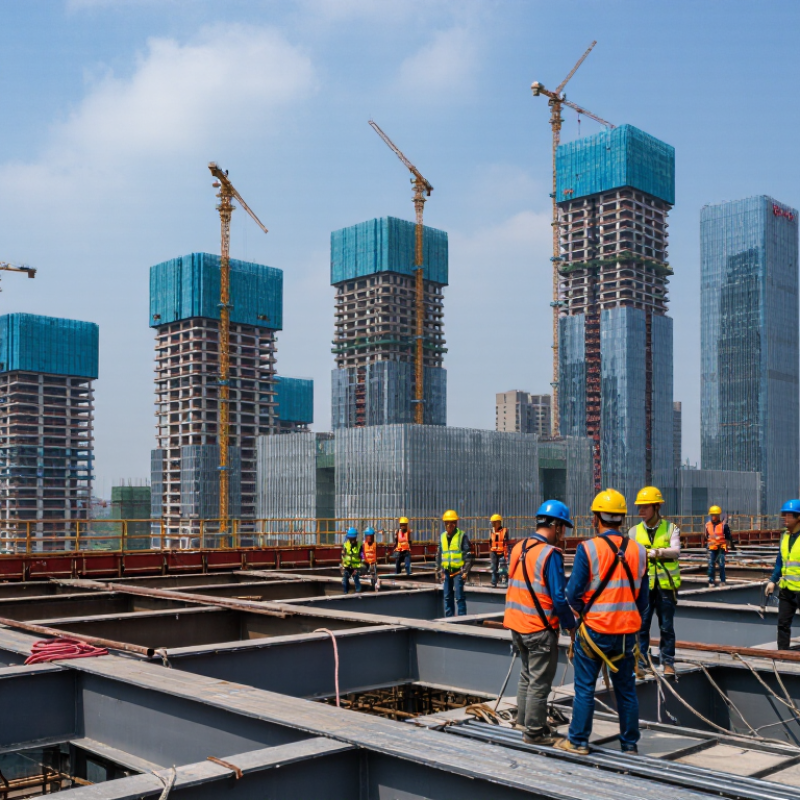
China Top 10 Height Safety Suppliers Why Is It Critical?

What Height Safety Equipment Includes and How It Prevents Falls

What Height Safety Equipment Includes and How It Prevents Falls

Height safety equipment is more than a harness. A complete setup may include guardrails, safety nets, full-body harnesses, connectors, lifelines, energy-absorbing lanyards, and secure anchor points. Each part has a job. Guardrails keep workers away from edges; harness systems arrest a fall when prevention fails. A helmet can reduce certain head-injury risks, but it cannot stop a fall. The equipment must fit the task, the worker, and the structure.

The scale of the risk is clear. The U.S. Bureau of Labor Statistics reported 395 fatal falls, slips, and trips among construction workers in 2022. Fall protection therefore depends on more than having gear nearby. Workers need to inspect webbing for cuts, check connectors for damage, and confirm that anchor points are suitable before use. A short drop can still create dangerous forces. Small details matter. Training should include how to connect equipment and what to do after a fall, since a suspended worker may need prompt rescue. Even a well-chosen harness can fail as a system if the anchor is weak or the lanyard is too long. That is an uncomfortable detail, but one worth checking.

Why Height Safety Is Critical in High-Risk Workplaces

In high-risk workplaces, working at height can turn a small mistake into a serious injury. A wet platform, loose cable, or poorly fitted harness may create danger within seconds. The risk is real. Protective equipment helps only when workers choose suitable gear, wear it correctly, and connect it to a secure anchorage. Teams also need clear procedures and practical training, not just equipment stored in a cabinet.

Tips: Check harnesses, connectors, and anchor points before each use. Look for cuts, corrosion, damaged stitching, or missing labels. Confirm that workers understand how to adjust their equipment. Keep access routes clear. Small details matter.

Reliable height safety also depends on planning what happens after a fall. A suspended worker may need prompt assistance, so teams should know who raises the alarm and how rescue will be carried out. Inspections and training records can help identify gaps over time. Still, a checklist can miss a rushed worker or a changing work area. Reviewing the job on site, and speaking openly about near misses, helps make safety measures more practical.

Key Standards for Evaluating Height Safety Suppliers in China

China Top 10 Height Safety Suppliers Why Is It Critical?
Key Standards for Evaluating Height Safety Suppliers in China

When sourcing height safety equipment in China, evaluate evidence, not just catalog claims. Ask which current GB standards apply to each product, including harnesses, connectors, lifelines, and anchorage devices. For export projects, confirm the destination’s requirements separately. A certificate for one product category does not prove every component complies. Request test reports showing the model, test date, issuing laboratory, and standard edition.

Tips: Match report model numbers to product labels. Inspect stitching, buckles, metal edges, and batch codes on a sample. Details matter.

Assess production controls and after-sales support, too. A capable supplier should explain material checks, batch traceability, inspection frequency, and how it handles defective units. Review inspection records and user instructions in clear language. If possible, arrange a factory audit or independent sample testing before a large order. Ask technical staff about fall clearance and equipment compatibility. A practical concern: paperwork may look complete while field instructions remain vague. Document delivery checks, corrective actions, and replacement procedures before purchase.

China Top 10 Height Safety Suppliers: Why Is It Critical? — Key Standards for Evaluating Height Safety Suppliers in China
No. Evaluation Criterion What to Verify Practical Evidence and Evaluation Benchmark
1 Product-standard compliance Check that each product category is assessed against the standards and regulatory requirements applicable to its destination market. Relevant references include China’s GB 6095-2021 for personal fall-protection systems and, where applicable, EN 361 for full-body harnesses, EN 355 for energy absorbers, EN 360 for retractable fall arresters, and EN 362 for connectors. Request product-specific test reports, declarations or certificates required for the target market, and verify the product model, standard edition, test scope, and issuing body. A certificate for one product type should not be treated as evidence for an entire product range.
2 Traceable testing and certification Confirm that test results relate to the exact model and configuration being purchased, and that any claimed third-party testing can be independently checked. Match model numbers and product descriptions across the test report, certificate, label, and quotation. Check the laboratory’s relevant accreditation scope; ISO/IEC 17025 accreditation concerns laboratory competence and does not itself certify a product.
3 Quality-management controls Evaluate whether production processes, inspection, corrective actions, and document control are managed consistently. Review a valid ISO 9001 certificate, including its scope and site coverage, alongside inspection records and nonconformity procedures. ISO 9001 is a quality-management-system standard, not a substitute for product safety testing.
4 Design suitability and system compatibility Assess whether harnesses, connectors, lanyards, lifelines, and anchor devices are suitable for the intended task and compatible as a complete system. Request system diagrams, permitted-use instructions, compatibility information, and guidance on clearance and potential swing-fall hazards. Confirm that system components are selected for the actual work method and anchorage conditions.
5 Anchor-device requirements For relevant products, review EN 795 requirements for anchor devices and confirm that the device type, installation method, and intended users match the application. Ask for the applicable test documentation, installation instructions, substrate requirements, and any required structural assessment. An anchor-device standard does not replace verification that the supporting structure is suitable.
6 Instructions, marking, and user information Check that products are clearly identified and supplied with understandable instructions covering fitting, use, limitations, inspection, and care. Review labels and instructions for model identification, applicable standard references, warnings, size or adjustment information where relevant, and the manufacturer’s contact and traceability details. EN 365 provides general requirements for instructions, maintenance, periodic examination, marking, and packaging of personal fall-protection equipment.
7 Inspection, maintenance, and retirement guidance Determine whether the supplier provides practical procedures for pre-use checks, periodic examination, maintenance, and removal from service after damage or a fall event. Request inspection checklists and written retirement criteria. Confirm that inspection intervals and service-life guidance are product-specific and follow the applicable instructions and local requirements; do not rely on a single generic service-life claim for every product.
8 Material and environmental suitability Check whether materials and product construction are appropriate for the expected temperature, moisture, chemicals, abrasion, UV exposure, and other workplace conditions. Review material specifications, declared limitations, care instructions, and relevant test evidence. Ask for written confirmation of compatibility where equipment may encounter chemicals, sharp edges, heat, or other specific hazards.
9 Production consistency and traceability Assess whether finished products can be linked to production records and whether changes to materials, components, or manufacturing processes are controlled. Check batch or serial identification, incoming-material controls, in-process and final-inspection records, and change-control procedures. Compare samples with the approved specifications and the product documentation.
10 After-sales support and supplier due diligence Evaluate technical support, complaint handling, replacement-part availability where applicable, delivery reliability, and the supplier’s ability to provide current documentation. Review written warranty terms, response procedures, product-recall or safety-notice processes, and referenceable delivery records. Use a documented scorecard and verify claims directly; these criteria support comparison and do not constitute a ranking of named suppliers.

Profiles of 10 Leading Height Safety Suppliers in China

China’s height-safety market includes suppliers with different strengths, not one universal leader. Ten useful profiles include makers of harnesses, lanyards, vertical lifelines, anchor devices, guardrails, access systems, rescue equipment, integrated fall-arrest kits, inspection services, and custom project solutions. Some focus on stable production; others handle site-specific designs or export documentation. Compare actual capabilities rather than relying on a “top ten” label. A polished catalogue can still leave gaps.

Tips: Ask for test reports, material traceability, clear user instructions, and product samples. Check stitching, connectors, labels, and adjustment points. Confirm that proposed equipment suits the work height, exposure, and rescue plan. Small details matter.

Reliable suppliers explain limits as clearly as features. Request evidence for the exact product model, then review it with a qualified safety professional. Ask how quality checks are recorded and how design changes are communicated. Lead times and customization can vary, even within one supplier’s range. That is worth admitting: a profile is only a starting point, not proof of site suitability.

How to Compare Suppliers by Products, Compliance, and Support

China Top 10 Height Safety Suppliers: Why Is It Critical?

Comparing suppliers means looking beyond price and catalogue photos. Check whether their range covers the actual task: full-body harnesses, compatible connectors, lifelines, and rescue equipment. Fit matters. A harness should sit securely over work clothing, with buckles easy to inspect and adjust.

In 2022, the U.S. Bureau of Labor Statistics recorded 395 construction deaths from falls, slips, and trips. The figure shows why product selection and correct use deserve careful attention.

Ask for traceable test documentation and clear information about applicable standards, such as ANSI/ASSP Z359 or EN 361, where relevant. Requirements vary by market, so a standards reference alone does not prove that every product or configuration is suitable. Compare inspection guidance, replacement criteria, spare-part availability, and training support.

A polished catalogue can still hide gaps. I would check how quickly a supplier answers a practical question about compatibility, not just how quickly it sends a quotation.

Tips: Request sample documents, a product compatibility chart, and a written response-time commitment. Test the proposed equipment with the people who will wear it. If guidance is vague, pause and ask for clarification.

FAQS

Why is height safety important in high-risk workplaces?

A wet platform, loose cable, or poorly fitted harness can cause danger within seconds. The risk is real.

What should workers check before using fall-protection equipment?

Inspect stitching, buckles, connectors, labels, and anchor points. Look for cuts, corrosion, damaged seams, or missing labels.

What should buyers request from equipment suppliers?

Request test reports for the exact product model. Check the test date, issuing laboratory, and applicable standard edition.

Does one certificate prove every component meets requirements?

No. A certificate for one product category does not confirm that every component complies.

How can buyers assess a supplier’s production controls?

Ask about material checks, batch traceability, inspection frequency, and procedures for defective units. Review the records.

What should teams plan for after a fall?

Decide who raises the alarm and how rescue will happen. A suspended worker may need prompt assistance.

How can buyers confirm equipment suits a worksite?

Match equipment to work height, exposure, and rescue plans. Ask a qualified safety professional to review compatibility.

Are supplier profiles enough to prove a product is suitable?

No. Profiles are only a starting point. A polished catalogue can still leave gaps.

How can teams find practical safety gaps?

Review the work area and discuss near misses openly. A checklist can miss a rushed worker.

Conclusion

This article explains what height safety equipment includes, from harnesses and lanyards to lifelines, anchor points, and protective systems designed to reduce the risk of falls. It shows how these tools work together and why is safety critical when working at height, especially in construction, maintenance, and other high-risk environments where a fall can cause severe injury or loss of life. The article also outlines practical factors for assessing height safety suppliers in China, including product quality, manufacturing capability, relevant standards, and reliable technical support.

Readers will find profiles of ten leading suppliers, presented without focusing on brand promotion, alongside guidance for comparing their product ranges, compliance documentation, customization options, delivery reliability, and after-sales service. By considering both equipment performance and supplier support, buyers can make more informed choices, strengthen workplace fall-prevention practices, and select solutions suited to the hazards and requirements of their projects.

Madeline

Madeline

Madeline is a dedicated marketing professional with a wealth of expertise in our company's core offerings. With a keen understanding of the industry, she brings a unique perspective to her role, consistently delivering high-quality content that highlights the superior aspects of our products. As......