Elevated work platforms help crews reach overhead work without building fixed access structures. Their role changes from one job site to another. A scissor lift may move workers and tools through a warehouse aisle. A boom lift can reach over obstacles on a construction site. In both cases, the right choice depends on working height, ground conditions, available space, and the task.
Readers often ask, “which industries use elevated work platforms the most?” There is no single answer that fits every region or company. Construction, warehousing, utilities, manufacturing, and facility maintenance are frequent users, but their needs differ. This guide examines ten industries, the tasks that bring workers off the ground, and the platform types commonly suited to those settings. It also considers practical details, such as narrow aisles, uneven outdoor surfaces, and repeated maintenance work. Small differences matter. A platform that fits an open factory floor may be unsuitable for a crowded loading area. Operators still need appropriate training, and equipment should be checked before use. These basics can sound obvious, yet they are easy to rush when schedules tighten. The comparisons ahead offer a useful starting point, not a universal ranking; usage varies with local work, site design, and equipment availability.
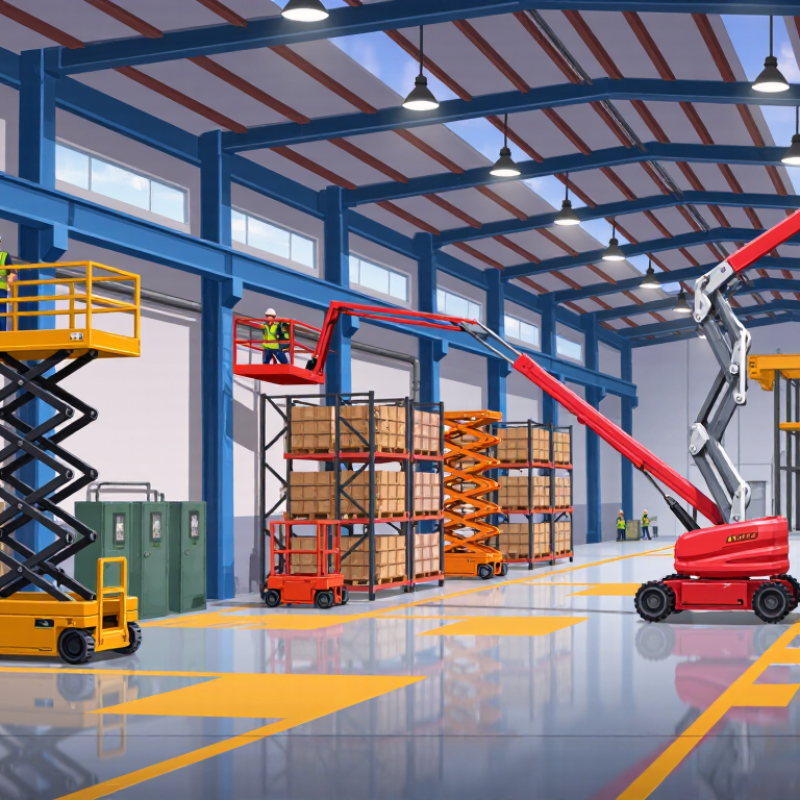
Elevated work platforms (EWPs) are machines that raise workers, tools, and materials to a job site. Construction crews, warehouse teams, utility workers, and building-maintenance staff use them for tasks above ground level. Their guardrails, work platforms, and controls provide a stable work area when the equipment is selected and operated correctly. Details matter.
Scissor lifts move mainly straight up and down, making them useful for overhead work on firm, level floors. Their broad platforms can hold workers and equipment, but they need room to maneuver. Boom lifts reach outward as well as upward. Articulating booms bend around obstacles, while telescopic booms extend in a straighter line to reach distant areas. For tight indoor spaces, compact vertical-mast lifts or push-around platforms may be more practical.
A machine’s reach is only part of the decision. Check the working height, platform capacity, floor condition, doorway clearance, and whether the job requires horizontal outreach. A narrow warehouse aisle may suit a compact lift; an uneven outdoor work area may call for equipment designed for that terrain. A neat list of platform types can still mislead: similar-looking machines may behave differently in confined spaces. Operators need training on the specific equipment, and a pre-use check can catch problems such as damaged rails or controls that do not respond properly.
Choosing an elevated work platform starts with the task, not the machine. A warehouse technician replacing a high-bay light may need narrow turning clearance and several hours of stable access. A construction crew working outdoors may need greater reach, rough-terrain tires, and room for tools. The right choice depends on what workers must do at height.
Measure the working height and the platform’s horizontal reach, then check the route to the job. Doorways, floor loading, overhead pipes, and uneven ground can rule out an otherwise suitable option. Consider the combined weight of workers, tools, and materials; a full platform can exceed its limit quickly. Small details matter. Indoors, electric equipment may reduce exhaust and noise. Outdoors, wind exposure and changing ground conditions need careful attention.
The platform should also match the work’s duration and movement. A scissor lift can suit tasks that need a broad, steady deck, while a boom platform can reach over obstacles. Neither is automatically safer for every job. Operators need task-specific training, and teams should understand inspection routines, fall protection requirements, and emergency lowering procedures. Check access points before delivery; a machine that cannot reach the work area is no help. Not every time. A tidy selection checklist can still miss awkward realities, such as a cable tray blocking the best position. Walk the site with the operator and revise the plan when conditions differ.
Indicative overview of industries with frequent work-at-height needs; the order is not a measured market-share ranking. Platform choice depends on the task, site conditions, manufacturer guidance, and applicable safety requirements.
| Rank | Industry | Typical elevated work | Common platform options | Key selection considerations |
|---|---|---|---|---|
| 1 | Construction | Structural work, façade installation, painting, ceiling services, and site inspections. | Scissor lifts, boom lifts, and compact vertical mast lifts. | Required working height and outreach, ground firmness, indoor or outdoor use, access routes, and space around the work area. |
| 2 | Facilities Management and Building Maintenance | Lighting replacement, HVAC servicing, ceiling repairs, cleaning, and building inspections. | Vertical mast lifts, scissor lifts, and compact boom lifts. | Indoor access, floor protection, doorway and elevator dimensions, maneuverability, and the tools and materials workers need to carry. |
| 3 | Warehousing and Logistics | High-bay lighting, sprinkler and racking inspections, inventory tasks, and equipment maintenance. | Narrow-aisle scissor lifts and vertical mast lifts. | Aisle width, floor loading and condition, overhead obstructions, required platform height, and safe separation from moving vehicles. |
| 4 | Manufacturing and Industrial Production | Machinery maintenance, overhead pipework, production-line servicing, and plant inspections. | Scissor lifts, vertical mast lifts, and boom lifts where outreach is needed. | Work-area layout, floor capacity, operating environment, access to the task, and coordination with production equipment and processes. |
| 5 | Utilities and Energy | Work on substations, power and water facilities, renewable-energy sites, and service infrastructure. | Boom lifts, rough-terrain scissor lifts, and tracked compact lifts. | Terrain and slope, ground bearing conditions, reach requirements, weather exposure, and electrical hazards. Maintain required clearances and follow site-specific safety procedures. |
| 6 | Telecommunications | Installation and maintenance of antennas, cables, rooftop equipment, and communication infrastructure. | Boom lifts and compact tracked lifts. | Required horizontal outreach, access and setup space, ground conditions, proximity to overhead lines, and any restrictions at the site. |
| 7 | Transport, Aviation, and Rail | Hangar and terminal maintenance, vehicle or aircraft servicing, lighting work, and inspection tasks. | Scissor lifts, boom lifts, and low-marking indoor lifts where suitable. | Clearance around vehicles and structures, floor loading, surface protection, access restrictions, and coordination with active transport operations. |
| 8 | Retail and Commercial Property | Signage, lighting, sprinkler checks, seasonal displays, and high-level cleaning. | Compact scissor lifts and vertical mast lifts. | Customer access and segregation, doorway dimensions, floor finish, working height, and whether the task can be completed within a confined area. |
| 9 | Events and Entertainment | Stage lighting, rigging, venue setup, display installation, and temporary-event maintenance. | Scissor lifts, vertical mast lifts, and compact boom lifts. | Venue access, ceiling height, floor loading, setup time, crowd exclusion, and the reach and platform capacity needed for the equipment and crew. |
| 10 | Agriculture and Horticulture | Greenhouse repairs, orchard work, building maintenance, and seasonal structure inspections. | Rough-terrain scissor lifts, boom lifts, and tracked compact lifts. | Uneven or soft ground, slope, crop and structure clearance, access width, weather conditions, and the machine’s suitability for the terrain. |
Elevated work platforms are common wherever people need temporary access above floor level. Construction crews use them to install ceilings, inspect steelwork, and reach exterior façades. In warehouses and logistics centers, workers retrieve stock from high racks and check lighting. Manufacturing teams use platforms near production lines, where stable access can make routine inspections easier. Facilities maintenance crews rely on them for changing lamps, cleaning vents, and repairing overhead doors. Small tasks, repeated often.
Utilities and telecommunications workers use platforms to access poles, cables, and equipment, while aviation teams inspect aircraft hangars and service areas. At entertainment venues, crews position lights and speakers above stages. Retail workers reach signs, displays, and high shelving. In agriculture, platforms can help with tasks such as pruning trees or maintaining tall greenhouse structures. Conditions vary widely: a smooth warehouse floor is not the same as wet ground outdoors.
The most suitable platform depends on working height, load, floor conditions, and how often the task occurs. Check access routes and overhead obstacles before positioning equipment; a doorway or low beam can complicate an otherwise simple job. Training and equipment inspections also matter. Industry rankings are only a guide, not a universal rule. A detail that is easy to overlook: workers may need room to turn, not just enough height to reach.
Common elevated-work applications across industries. Bars count representative task examples, not platform usage or industry-wide adoption.
Example tasks include installation, inspection, repairs, cleaning, and stock handling. Counts are a curated illustration, not survey results or market rankings.
Construction crews use elevated work platforms for tasks that would otherwise require repeated ladder moves or extensive scaffolding. Workers may install façade panels, connect overhead services, or reach steel joints several metres above ground. A stable base matters. Before lifting, crews need to check ground conditions, platform capacity, overhead obstructions, and changing weather. A rushed setup can turn a routine task into a difficult one.
In manufacturing, platforms help maintenance teams inspect conveyors, replace lights, and reach pipework above production lines. Their compact footprint can be useful where floor space is tight. Still, nearby machinery, moving stock, and narrow access routes require careful coordination. A machine shutdown or a blocked aisle may change the plan. Even a detailed assessment can miss a small hazard, such as a low beam or a slippery patch near the work area.
Infrastructure projects bring different demands. Teams use elevated platforms to inspect bridge components, service station canopies, and maintain utility structures. These jobs may involve uneven ground, traffic, or limited access for rescue equipment. Crews should match platform type and reach to the task, then inspect controls and protective systems before use. Training helps, but it is not a guarantee; workers still need to pause when site conditions change.
Utilities depend on elevated work platforms for inspecting substations, replacing streetlights, and reaching overhead lines. The U.S. Department of Energy’s 2023 National Transmission Needs Study says transmission capacity may need to grow 2.3 to 2.9 times by 2050, compared with 2020 levels. More grid work means more access challenges, especially around live infrastructure and uneven ground. Careful positioning matters.
Warehouses use scissor and boom lifts to maintain high-bay lighting, sprinklers, and racking. The U.S. Census Bureau reported that e-commerce made up 15.4% of U.S. retail sales in 2023. That figure does not measure lift use, but it reflects the scale of distribution activity behind busy fulfillment sites. Narrow aisles and active picking areas leave little room for error.
Agriculture brings different conditions: orchard pruning, greenhouse repairs, and maintenance around grain facilities. USDA’s 2022 Census of Agriculture counted about 1.9 million farms across 880 million acres. Worksites can be remote, muddy, or sloped. Specialized uses include airport hangars, stadium lighting, and bridge inspection, where access height and obstacles vary sharply. The reports cited here do not track platform use directly; that gap is worth keeping in mind when comparing industries.
It raises workers, tools, and materials to jobs above ground level. Common tasks include repairs, inspections, and overhead installation.
Scissor lifts mainly move straight up and down on level floors. Boom lifts can reach outward, including around obstacles.
Check working height, platform capacity, floor conditions, doorway clearance, and required outreach. A narrow aisle changes the choice.
Compact vertical-mast lifts or push-around platforms may fit better. Measure doorways and check nearby beams.
Teams use them to service lights, sprinklers, conveyors, pipework, and storage racks. Moving stock and machinery can restrict access.
Uneven, muddy, or sloped ground can affect equipment choice and positioning. Weather and overhead obstacles matter too.
They can reveal damaged guardrails or controls that respond poorly. Small faults are easy to overlook.
No. Training helps, but changing site conditions still require workers to pause. Not every hazard is obvious.
Elevated work platforms help people reach high or difficult-to-access areas while carrying tools and materials. Common types include scissor lifts, boom lifts, mast lifts, and vehicle-mounted platforms. Choosing the right option depends on working height, reach, ground conditions, available space, load requirements, and the task itself. Careful planning and proper operator training are important for safe, efficient work at height.
So, which industries use elevated work platforms the most? Construction, manufacturing, and infrastructure are major users, relying on them for building work, equipment installation, maintenance, and inspections. Utilities use platforms to access poles, cables, and other elevated systems, while warehouses use them for storage and facility upkeep. Agriculture may use them to maintain buildings or reach elevated work areas, and specialized sectors use them for tasks such as event setup, transportation maintenance, and public-facility repairs. Their versatility makes them useful wherever work requires reliable access above ground level.

Anugenix Lift