How to Compare Different Lifting Technologies for Global Buyers?

Time:2026-09-06 Author:Sienna
0%

Global buyers often ask, “what is the difference between various lifting technologies?” The answer is rarely found in rated capacity alone. A 5-ton overhead crane, electric hoist, hydraulic lift, and vacuum lifter may handle similar loads. Yet their controls, duty cycles, installation needs, and failure risks can differ sharply.

Ross Moloney, CEO of the Lifting Equipment Engineers Association, has said, “Safety is not a feature; it is the foundation of lifting.” That principle should guide every international comparison. Buyers need more than brochures. They should examine load shape, lifting height, working frequency, floor strength, power supply, operator training, and maintenance access. A warehouse with narrow aisles may favour an electric chain hoist. A fabrication plant may require a bridge crane with precise travel control. A glass manufacturer might need vacuum lifting equipment instead.

Look beyond the purchase price. Compare total ownership cost, spare-parts availability, certification practices, inspection records, and supplier response times. Regional standards also matter. CE marking, UKCA requirements, OSHA expectations, and local crane regulations may affect procurement decisions. These details can change the final choice.

No comparison is perfect. Real sites are messy. Dust, heat, uneven floors, and rushed operators expose weaknesses that factory demonstrations hide. We will therefore compare each technology through practical use cases, measurable performance, and verified safety considerations. The goal is not to promote one solution. It is to help global buyers select equipment that works reliably when the load is suspended, the aisle is crowded, and downtime becomes expensive.
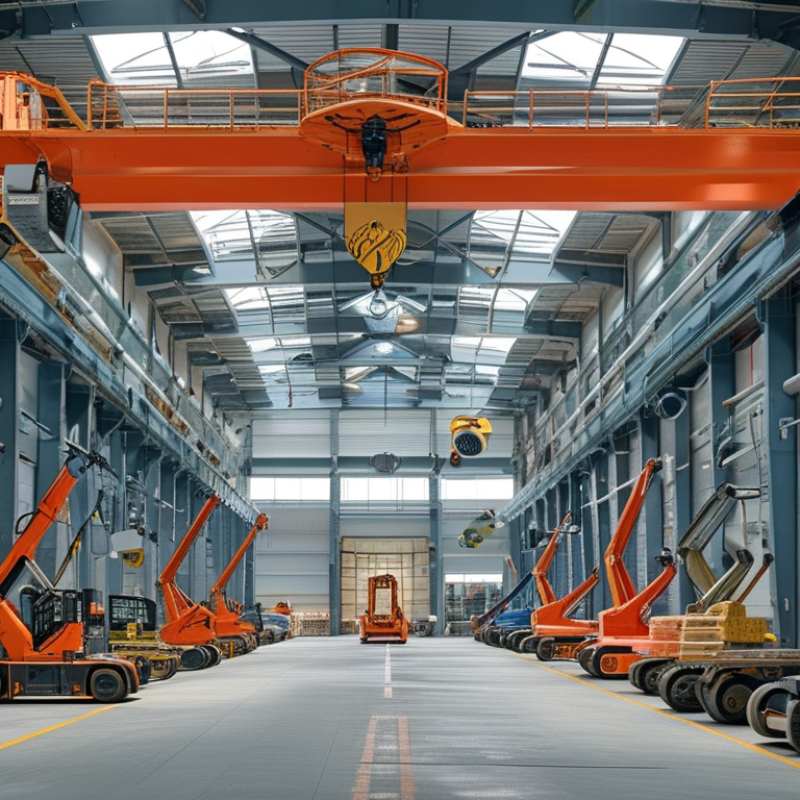
How to Compare Different Lifting Technologies for Global Buyers?

Defining the Main Types of Lifting Technologies

Global buyers should begin by defining the lifting technology, not by comparing prices. Cranes move loads across a fixed area, while hoists raise and lower loads vertically. Winches pull materials over distance using drums and cables. Forklifts combine lifting with short-distance transport, often inside warehouses or loading zones.

Cranes include overhead, gantry, mobile, and tower types. Overhead cranes suit factories with regular lifting paths and limited floor space. Gantry cranes work well in open yards or temporary work areas. Mobile cranes offer flexibility but require stable ground, transport planning, and clear operating zones. Tower cranes provide height and reach for construction projects, but installation and wind limits need careful review. Conveyors are not traditional lifting devices, yet they can reduce repeated manual handling between fixed points.

Tips: Compare rated capacity, lifting height, duty cycle, control method, power supply, maintenance access, and local certification requirements. Inspect the load chart, emergency features, and spare-part availability. A salt-air port may need different protection than a dry warehouse. A narrow aisle may also make a powerful machine impractical. Lower purchase cost can hide higher energy use or difficult servicing. I have seen comparisons focus too heavily on maximum capacity. That number alone is not enough. Buyers should examine real load frequency, travel distance, floor conditions, operator training, and expected working life. Some decisions remain uncertain until the site is measured carefully.

How to Compare Different Lifting Technologies for Global Buyers?

Defining the Main Types of Lifting Technologies

The chart compares representative rated-capacity ranges for major lifting technologies. Actual capacity depends on equipment configuration, duty class, lifting height, operating environment, and applicable safety standards. Manual hoists are typically selected for low-cost, intermittent lifting, while powered hoists, overhead cranes, gantry cranes, and mobile cranes support progressively heavier or more frequent lifting operations.

Capacity ranges are expressed in metric tonnes and represent commonly specified commercial applications rather than fixed limits for every equipment model.

Comparing Capacity, Height, Speed, and Operating Range

How to Compare Different Lifting Technologies for Global Buyers?

Comparing lifting equipment starts with capacity, but rated load is only part of the decision. Check the working load, attachment weight, load center, and duty cycle. A system rated for 10 tonnes may perform differently when lifting long, uneven materials. Numbers can mislead. I once reviewed a project where the stated capacity ignored frequent side loading, creating unnecessary strain on the structure.

Lifting height should include the full path, not only the final elevation. Measure ceiling clearance, pit depth, platform thickness, and the space needed for maintenance. A taller lift is not always better. Its mast, cables, or hydraulic components may reduce usable building space. Confirm the lowest operating position as carefully as the highest one.

Speed also requires context. Fast travel can improve productivity, yet controlled acceleration protects fragile loads and reduces swing. Compare lifting speed, lowering speed, positioning accuracy, and recovery after repeated cycles. Operating range matters beyond distance. Assess temperature, dust, humidity, floor conditions, power supply, and outdoor exposure. A machine tested indoors may struggle on a cold, uneven site. Ask for test records, inspection intervals, emergency procedures, and local service capability. Country-specific standards and operator training should be verified before purchase, not after installation. Real projects rarely match the brochure perfectly. Allow practical safety margins.

Evaluating Safety, Reliability, and Maintenance Requirements

When global buyers compare lifting technologies, safety should lead the discussion, not purchase price. A reliable assessment starts with the actual worksite. Consider load weight, lifting height, operating cycles, floor condition, weather exposure, and operator visibility. A system that performs well indoors may struggle near salt air or uneven ground. Ask for verified test data, safety-factor calculations, emergency-stop performance, and inspection records. Do not accept vague claims. In practical evaluations, small details matter: readable load charts, guarded moving parts, stable controls, and clear access for daily checks. I have seen projects underestimate clearance requirements, then redesign the installation after delivery. That mistake is expensive, but preventable.

Tips: Request maintenance schedules before selecting equipment. Compare inspection intervals, spare-part availability, technician training, and diagnostic access. Check whether common service tasks need special tools or long shutdowns. Reliability is not only mechanical strength; it also depends on documentation and response time. Review independent certificates where applicable, and confirm that testing matches the intended operating environment. A lower-maintenance design may still be unsuitable if repairs require distant support. Ask suppliers for realistic service scenarios, including a failed sensor during a busy shift. Their answers often reveal more than polished brochures.

Maintenance planning should include records, operator feedback, and periodic risk reviews. Digital monitoring can identify unusual vibration or rising duty cycles, but it cannot replace physical inspection. Technology changes, and assumptions age. Recheck them. A careful buyer should also confirm local training requirements, inspection responsibilities, and emergency procedures before installation. These details are easy to overlook during international purchasing. Yet they strongly influence safe operation and long-term reliability.

Assessing Energy Use, Installation, and Total Ownership Costs

Global buyers should compare lifting technologies through total ownership costs, not purchase prices alone. Energy use often becomes the largest expense after installation. Request measured consumption under typical loads, not only laboratory figures. A system lifting 80 cycles daily may need different efficiency targets than one operating occasionally. Ask for standby power data, motor performance, and expected maintenance intervals. Small losses become expensive over ten years.

Installation conditions can change the financial picture quickly. Check floor strength, ceiling height, access routes, and local electrical requirements. A compact system may still require costly structural changes. Imported equipment can also face longer delivery times for replacement parts. Local technicians, training, and language support deserve a clear value in the quotation. Installation estimates are sometimes too optimistic. We have seen projects delayed by permits, wiring changes, and unavailable lifting crews.

A practical ownership model should include purchase cost, transport, duties, installation, energy, inspections, repairs, and eventual removal. Use the same operating assumptions for every option. Compare annual costs across at least five and ten years. Then test difficult conditions, such as heavier loads or colder climates. Safety compliance must be verified against the buyer’s local regulations and site rules. A lower-cost option may prove expensive if it needs frequent adjustment. Yet detailed forecasts remain imperfect. Real usage rarely follows the spreadsheet. Buyers should leave a contingency allowance and review actual performance after commissioning.

Selecting the Right Lifting Technology for Global Applications

Selecting the right lifting technology starts with the application, not the equipment catalog. Global buyers should define load weight, lifting height, duty cycle, workspace, and power availability. A compact electric hoist may suit an indoor workshop, while a hydraulic system can perform better in demanding outdoor conditions. Climate matters too. Dust, humidity, salt air, and extreme temperatures can change maintenance needs.

Compare rated capacity, control accuracy, installation requirements, and operator training. Check how easily technicians can inspect ropes, chains, brakes, cylinders, and emergency controls. Ask for test records, service guidance, spare-part availability, and documented safety procedures. Local standards also deserve careful review. A technically strong solution may still create delays if it does not fit regional certification or site requirements. Field assessments often reveal practical issues that product sheets miss, such as limited headroom or unstable flooring.

Tips: Build a simple comparison table. Include purchase cost, energy use, maintenance hours, and expected downtime. Request application references from similar environments. Do not choose capacity too close to the regular load. It leaves little margin. However, oversized equipment may increase cost and reduce control. This balance is easy to misjudge. A site visit, even a virtual one, can correct weak assumptions before procurement. Flexible solutions are useful, but excessive flexibility may complicate training and inspections.

How to Compare Different Lifting Technologies for Global Buyers? - Selecting the Right Lifting Technology for Global Applications

Lifting Technology Typical Rated Capacity Typical Lifting Height or Reach Typical Lifting Speed Mobility Power and Site Requirements Main Advantages Main Limitations Best-Fit Global Applications
Electric Chain Hoist 125 kg–10 t 3–20 m standard; longer lifts are available with special configurations Approximately 2–8 m/min; variable-speed models are available Portable, fixed, or mounted on a trolley or workstation crane Usually three-phase or single-phase electric supply; requires a suitable support structure and rated attachment point Compact design, relatively low initial cost, precise positioning, easy installation Lower capacity and duty cycle than many wire-rope systems; chain wear requires inspection and lubrication Workshops, maintenance areas, light manufacturing, installation work, and indoor material handling
Electric Wire-Rope Hoist 1–100 t for common industrial installations; higher capacities are engineered for specific projects 6–30 m is common; greater heights are possible with engineered crane systems Approximately 4–20 m/min, depending on capacity, duty class, and controls Normally travels on an overhead crane, gantry crane, or monorail Three-phase electrical supply, runway beams or rails, end stops, limit switches, and adequate building structure High lifting capacity, efficient vertical lift, long travel distances, and suitability for frequent industrial duty Higher installation cost, greater headroom requirements, and more complex maintenance than chain hoists Steel processing, machinery manufacturing, warehouses, shipyards, power facilities, and heavy industrial plants
Overhead Bridge Crane 1–500 t is common across industrial facilities; project-specific systems can exceed this range Lift heights commonly range from 5–40 m, subject to building geometry Hoist speed approximately 2–20 m/min; bridge and trolley travel are commonly 10–80 m/min Covers a defined three-dimensional work area along rails Permanent runway structure, adequate building columns or independent supports, electrical power, and operator controls Excellent area coverage, repeatable handling, high productivity, and scalable capacity High civil and installation cost; not suitable where the lifting area changes frequently Factories, logistics centers, foundries, assembly plants, maintenance bays, and production lines
Gantry Crane 1–200 t for many portable or semi-permanent systems; larger project cranes are also available Approximately 3–20 m under the beam, depending on leg height and design Hoist speed approximately 2–15 m/min; travel speed commonly 5–40 m/min Fixed, rail-mounted, or mobile on wheels; can operate indoors or outdoors Requires a level surface, adequate ground bearing capacity, electrical or battery power, and wind protection outdoors Does not require a building runway; flexible installation and good coverage for outdoor yards Occupies floor space, can be affected by wind, and may require ground rails or reinforced flooring Shipyards, precast yards, construction sites, container areas, workshops, and outdoor storage facilities
Hydraulic Mobile Crane 10–1,000 t or more, depending on crane configuration and counterweight arrangement Telescopic boom lengths commonly range from 10–100 m; actual lifting height depends on boom angle and load chart Boom and winch speeds vary widely; typical hoisting speeds are approximately 5–40 m/min Highly mobile on roads or prepared construction routes Diesel-hydraulic power, level and compacted ground, outrigger space, transport permits, and weather controls Rapid deployment, long reach, high capacity, and suitability for changing outdoor worksites Requires ground assessment, exclusion zones, skilled operators, setup time, and careful wind management Construction, infrastructure, energy projects, plant installation, bridge work, and emergency lifting
Rough-Terrain Crane 10–150 t is typical for rough-terrain construction equipment Boom lengths commonly range from 10–50 m Typical hoisting speeds are approximately 5–30 m/min, depending on the load and configuration Mobile on uneven or unpaved sites, but generally not intended for long-distance road travel without transport support Diesel-hydraulic drive, outriggers, stable working platform, and site access suitable for large tires Good maneuverability and stability on construction terrain; faster setup than many crawler systems Limited road mobility, substantial ground pressure, and reduced capacity at long radii Remote construction, infrastructure projects, industrial installation, and uneven outdoor worksites
Telescopic Forklift 1.5–6 t for common industrial and construction models Approximately 4–25 m, with capacity decreasing as the boom extends Approximately 0.2–0.5 m/s hydraulic lift speed under typical operating conditions Self-propelled and highly maneuverable; some models are suitable for rough terrain Diesel or electric power, firm travel routes, visibility controls, and load charts for each attachment Combines lifting, carrying, and reach functions; supports multiple attachments Capacity changes significantly with reach; not ideal for repetitive high-volume overhead lifting Construction, agriculture, warehousing, site logistics, material placement, and equipment installation
Hydraulic Lift Table 100 kg–10 t for common industrial models Approximately 0.5–4 m vertical travel Approximately 0.03–0.15 m/s, depending on platform size and load Fixed, pallet-mounted, or mobile on casters for lower capacities Electric hydraulic power pack or manual hydraulic system; requires a level floor and safe platform access Stable platform, low lifting height, ergonomic positioning, and simple vertical movement Limited vertical range and horizontal movement; unsuitable for lifting loads over obstacles Factories, loading areas, ergonomic workstations, vehicle maintenance, and warehouse handling
Vacuum Lifter Approximately 50 kg–2 t for common glass, panel, and sheet-handling systems Usually used with a crane or lifting frame; reach depends on the supporting equipment Approximately 2–10 m/min when integrated with a hoist or crane Portable attachment or crane-mounted; movement depends on the carrier Electric or battery-powered vacuum pump, smooth sealed surfaces, backup vacuum monitoring, and suitable ambient temperature Reduces manual handling, protects finished surfaces, and handles large panels without mechanical clamps Requires clean, non-porous contact surfaces; performance can be affected by dust, moisture, leakage, and power loss Glass installation, façade panels, metal sheets, stone slabs, doors, and clean-room material handling
Permanent Magnetic Lifter Approximately 100 kg–10 t, depending on magnet size, material, thickness, and surface condition Lift height depends on the crane, hoist, or jib used with the magnet Determined by the supporting lifting system; commonly 2–15 m/min Portable attachment that can be moved by crane, hoist, or workshop lifting equipment No continuous electrical power for permanent magnetic designs; requires clean ferromagnetic contact and verified load conditions Fast attachment, no slings or chains around the load, and good suitability for steel plates and round products Cannot lift aluminum, stainless steel grades with low magnetic response, wood, or non-ferrous materials; air gaps reduce capacity Steel service centers, fabrication shops, machine loading, plate handling, and metal storage areas
Global selection notes: The figures shown are typical planning ranges rather than guaranteed specifications. Final selection should be based on the complete load chart, rated capacity, duty cycle, load dimensions, center of gravity, lift frequency, travel path, installation conditions, ambient temperature, wind exposure, available voltage and frequency, spare-parts support, operator training, and applicable local regulations. Capacity must always be verified at the actual working radius, reach, attachment configuration, and site condition.

FAQS

: How do cranes, hoists, winches, and forklifts differ?

: Cranes move loads across fixed areas. Hoists raise and lower loads vertically. Winches pull materials over distance. Forklifts lift and transport loads short distances.

Which lifting technology suits an indoor factory?

An overhead crane suits regular lifting paths and limited floor space. A compact electric hoist may fit a small workshop. Measure headroom carefully.

When is a gantry crane a practical choice?

Gantry cranes work well in open yards or temporary work areas. They need clear travel paths and stable supporting surfaces.

What should buyers check before choosing mobile lifting equipment?

Check ground stability, transport access, operating zones, lifting height, and rated capacity. Poor ground conditions can make a flexible machine unsuitable.

How do climate conditions affect equipment selection?

Dust, humidity, salt air, and extreme temperatures change protection and maintenance needs. A coastal site may need stronger corrosion protection.

Is maximum lifting capacity the most important comparison?

No. Consider load frequency, travel distance, floor conditions, duty cycle, and expected working life. Capacity alone can mislead buyers.

What information should buyers request from suppliers?

Request load charts, test records, service guidance, emergency procedures, and spare-part availability. Ask for references from similar working environments.

How can buyers compare total operating costs?

Compare purchase price, energy use, maintenance hours, installation needs, and expected downtime. A cheaper machine may cost more to service.

Should equipment capacity closely match the regular load?

Leave a reasonable safety margin above the regular load. Oversizing can increase cost and reduce control. This balance is easy to misjudge.

Can a site visit improve the final decision?

Yes. A site visit can reveal limited headroom, narrow aisles, or unstable flooring. Virtual reviews help, but they remain imperfect.

Conclusion

Choosing the right lifting technology begins with understanding the main options, such as cranes, hoists, elevators, winches, and automated lifting systems. To answer the question “what is the difference between various lifting technologies,” global buyers should compare each solution by load capacity, lifting height, operating speed, movement range, precision, and suitability for indoor or outdoor environments. These factors help determine whether a system can meet current demands while supporting future operational growth.

Safety, reliability, and maintenance requirements are equally important. Buyers should assess protective features, inspection needs, replacement-part availability, installation complexity, energy consumption, and expected service life. Comparing purchase price alone can lead to poor decisions, so total ownership cost should include installation, training, maintenance, downtime, energy use, and eventual upgrades. By evaluating performance, operating conditions, compliance expectations, and long-term value together, organizations can select a lifting solution that is efficient, dependable, and practical for diverse global applications.

Sienna

Sienna

Sienna is a skilled marketing professional with a deep expertise in our company’s core products and services. With a passion for innovation and detail, she plays a pivotal role in crafting insightful blog posts that not only highlight the unique features of our offerings but also provide valuable......