Choosing aerial work equipment in 2026 means looking beyond platform height and rated capacity. The right safety features depend on the task, ground conditions, operator training, and foreseeable hazards. A compact scissor lift on a smooth warehouse floor faces different risks from a boom lift beside uneven outdoor terrain. Small details matter. A secure entry gate, intact guardrails, clear load limits, and accessible emergency-lowering controls can shape how safely a crew works at height.
The scale of workplace risk deserves attention. The U.S. Bureau of Labor Statistics reported 5,283 fatal work injuries across all industries in 2023; this figure is not specific to aerial work, but it shows why prevention cannot be an afterthought. IPAF’s Global Safety Report analyzes reported powered-access incidents and offers sector-specific evidence for reviewing risks and equipment choices. These sources help frame the question: which safety features are essential for aerial work? Buyers should compare fall-protection provisions, tilt and overload alerts, pothole protection, wind limits, and emergency descent options against the machine’s intended use. They should also check manufacturer instructions and site-specific requirements; one feature does not suit every job. Not every checklist catches every hazard. That deserves a second look. A sensor may warn an operator, but it cannot fix poor ground assessment or rushed planning. The safest choice combines suitable built-in protections with inspection, competent operation, and a realistic work plan. Safety is not a single button.
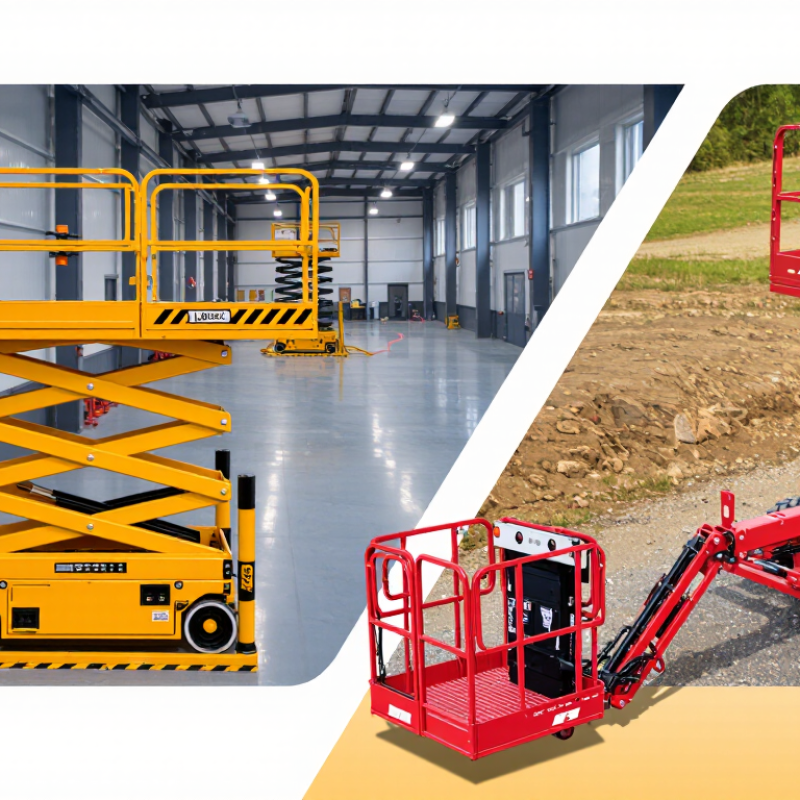
Choose an aerial work platform by mapping the task before comparing safety features. A worker installing ceiling cable indoors may need precise positioning and compact dimensions. Tree trimming or façade repairs may require horizontal reach, so a boom lift can be more suitable. Measure the working height and reach, not just the platform’s maximum height. Allow room for tools and materials within the rated capacity.
Height is only one factor. The U.S. Bureau of Labor Statistics reported 885 fatal work injuries involving falls, slips, and trips in 2023; this broad category is not specific to aerial lifts. Use that figure as a reminder to assess exposure, not as a lift-specific risk estimate. For elevated tasks, check guardrails, approved anchor points, and controls workers can reach from the platform. Small details matter. A harness cannot compensate for poor positioning or an overloaded platform.
Walk the site before selecting equipment. Check for sloped or soft ground, wet surfaces, doorways, overhead obstructions, and nearby electrical hazards. Rough terrain may call for suitable tires and a platform designed for uneven surfaces; confined indoor work may favor a narrower unit with non-marking tires. Confirm the manufacturer’s operating limits and inspect the ground where wheels or stabilizers will rest. I would not treat a smooth-looking slab as proof of stability. Conditions change, and a rushed site check can miss a soft patch near an edge.
Assess Guardrails, Harness Anchors, and Fall-Protection Options
When comparing aerial work platforms, inspect the guardrails, entry gate, and toe boards in person. Rails should feel secure, with no loose fittings or gaps that could let a worker slip through. Check that the gate closes properly. Small defects matter. A harness anchor must be identified for that specific platform and used as its instructions specify. Never assume a guardrail is a suitable anchor point.
Tips: Confirm which fall-protection method the task requires: restraint limits movement, while fall arrest stops a fall after it begins. Match the harness and connecting equipment to the approved anchor. Check labels, inspection records, and equipment condition before each use. If instructions are missing, pause and ask a qualified safety lead.
Also consider the work itself: reaching beyond the platform, moving between positions, or working near overhead obstructions can change the risk. A setup that seems fine on a level floor may not suit a sloped or crowded site. I would not treat a checklist as a substitute for training; it is easy to tick boxes and miss a worn gate latch. Reassess when the task or site conditions change.
When choosing an aerial work platform, check how its stability controls respond to real site conditions. Look for clear tilt or slope warnings, and confirm any required leveling or outrigger indicators work before raising the platform. Walk the travel path: a drain cover, soft shoulder, or hidden floor opening can matter more than a smooth-looking surface. Check the operating manual for wind limits and ground requirements. No sensor replaces a careful site inspection.
Platform limits should be easy to find and match the planned crew, tools, and materials. Add their total weight, then consider how uneven loading or an extended deck affects the machine’s limits. Keep gates closed, and avoid leaning out to reach a distant task. Check that ground-level controls and the emergency stop are accessible, then review the approved lowering procedure with everyone on site. Practice matters. If power fails or the operator becomes unresponsive, workers need to know who can lower the platform and how to call for help. I sometimes find these checks feel repetitive; skipping one, though, can leave a small problem unnoticed until the platform is elevated.
Advisory selection priorities, scored from 1 (lower priority) to 5 (highest priority); these are guidance scores, not measured performance data or regulatory ratings. Confirm the platform’s rated capacity, stability limits, and emergency procedures in its manufacturer documentation, and check applicable local safety requirements before use.
When choosing aerial work safety features in 2026, compare what each system detects and how quickly workers can respond. Load sensors can warn when a platform approaches its rated capacity, while tilt sensors may flag an unstable position. Proximity sensors can help identify nearby obstacles, but their range and performance vary with site conditions. Dust, rain, glare, and reflective surfaces can affect readings. Test features in the conditions where the lift will actually operate.
Alerts matter as much as sensors. A warning should be easy to notice without distracting the operator. Look for clear visual signals and audible alerts that remain useful around engines or other machinery. Some systems also offer vibration alerts. False alarms happen. If warnings are too frequent or unclear, workers may start ignoring them, so check whether settings can be adjusted safely and consistently.
Connected safety features can send equipment status, fault codes, or usage information to a supervisor or maintenance team. That can help identify recurring issues before a lift returns to service. Check how the data is transmitted, who can access it, and what happens when connectivity drops. A dashboard is not a substitute for inspection. Ask operators to demonstrate each feature, confirm that alerts work, and review maintenance records. Small details matter. A simple warning that crews understand may prove more useful than a complex system they rarely check.
| Safety feature | What it monitors or does | Typical alert or response | Where it can help most | Limits and selection checks |
|---|---|---|---|---|
| Platform load sensing | Measures the load on the platform and compares it with the machine’s rated capacity. | May sound or display an overload warning; some machines restrict selected functions until the overload is resolved. | Helps crews recognize overloading caused by people, tools, and materials. | Check the rated capacity and how the machine responds to overload. Do not treat the sensor as permission to exceed the capacity shown on the machine. |
| Tilt sensing | Detects when the machine’s chassis is outside its permitted level range. | May provide an audible or visual warning and, depending on the model and operating state, limit certain functions. | Useful when positioning equipment on slopes or uneven ground. | Permitted limits and function restrictions vary. Check the operator’s manual and use only on surfaces within the machine’s specified limits. |
| Proximity or obstacle detection | Uses sensors to identify nearby objects in a defined detection area. | May warn the operator or, on systems designed for it, reduce or stop movement. | Can add awareness when maneuvering near structures, equipment, or other obstacles. | Detection areas can have blind spots and may be affected by site conditions. It does not replace a trained spotter, visual checks, or careful operation. |
| Entrapment-prevention or secondary guarding device | Provides an additional means of alerting or interrupting operation if an operator is pressed against an obstruction; designs differ. | Depending on the design, may activate an alarm, stop or inhibit movement, or require a reset. | Relevant when the platform may be operated near overhead structures or other crushing hazards. | Confirm compatibility with the machine and task, understand reset procedures, and continue to plan routes that avoid trapping hazards. |
| Emergency stop and emergency lowering | Provides controls for stopping machine functions and, where fitted, lowering the platform from ground-level controls. | Emergency stop interrupts specified functions; emergency lowering follows the machine’s designed procedure. | Supports response to a machine fault or an operator who cannot use the platform controls. | Controls and procedures are machine-specific. Check accessibility, labeling, and that operators and ground personnel know how to use them. |
| Audible and visual alerts | Communicates selected conditions, such as movement, overload, tilt, or a system fault, when those alerts are provided. | Uses indicators such as lights, displays, or audible signals. | Can make machine status easier to notice in busy work areas. | Alert type and meaning vary. Ensure signals can be noticed in the site environment and train operators to interpret them correctly. |
| Connected telematics | Can transmit machine information such as location, operating hours, fault codes, or utilization, depending on the system. | May provide remote notifications, maintenance information, or fleet dashboards. | Helps managers monitor equipment status and plan inspections or maintenance across a fleet. | Connectivity is not a substitute for on-machine safety controls or required inspections. Check coverage, data access, privacy, and what information is actually transmitted. |
| Pre-use inspection and fault reporting tools | May support digital checklists or record reported defects; the inspection itself still requires a competent person to assess the machine. | Can flag incomplete checks or share defect reports with maintenance staff. | Useful for consistent handovers and tracking reported equipment issues. | A completed digital form does not prove a machine is safe. Follow the manufacturer’s inspection guidance and applicable workplace requirements. |
Selection note: Feature availability, alert logic, and automatic machine responses vary by equipment type and model. Verify details in the manufacturer’s manual, assess the worksite hazards, and train operators on the specific machine before use.
How to Choose Aerial Work Safety Features in 2026?
Aerial work safety features matter only when they suit the task and are properly maintained. Before comparing machines, confirm which standards apply at your worksite and check the equipment’s compliance documents. Look for clear ratings, readable warning labels, emergency-lowering instructions, and documented safety systems. A ground-level emergency stop is useful only if nearby workers know where it is and how to use it.
Tips: Ask operators to demonstrate pre-use checks, safe positioning, and emergency descent. Training should cover the actual controls, site hazards, load limits, and rescue steps—not just a classroom slide deck. Keep sign-in records and refresh training when equipment or work conditions change. Short practice sessions help.
Maintenance records deserve the same attention as safety features. Review inspection intervals, repair history, and the process for reporting faults. Check that guards, alarms, interlocks, and harness anchor points are inspected according to the manual. A checklist can still miss a worn cable or a sticky control, so competent inspections matter. On a busy site, people may rush; build time for checks into the work plan, and remove equipment from service when a safety-critical fault is found.
Check the guardrails, entry gate, and toe boards in person. Look for loose fittings, gaps, or a gate that will not close. Small defects matter.
No. Use only an anchor identified for that specific platform, following its instructions. Match the harness and connector to the approved anchor.
Restraint limits how far a worker can move. Fall arrest stops a fall after it begins. Choose the method required for the task.
Read the labels and review inspection records. Check the equipment’s condition before each use. If instructions are missing, pause and ask a qualified safety lead.
Load sensors can warn about approaching capacity limits. Tilt sensors may flag instability, while proximity sensors can help detect obstacles. Test them at the actual site.
Yes. Dust, rain, glare, and reflective surfaces can affect performance. False alarms happen. Check alerts around engines and machinery, too.
They may share equipment status, fault codes, or usage information with maintenance teams. Check who can access the data and what happens when connectivity drops.
Operators should demonstrate pre-use checks, safe positioning, and emergency descent. Review repair history and inspection intervals. A checklist can still miss a worn cable or sticky control.
Remove it when a safety-critical fault is found. Report the issue and follow the equipment’s instructions. Busy sites need time for proper checks.
Choosing aerial work safety features in 2026 starts with understanding the job. Consider the tasks workers will perform, the working height, how often the platform will move, and site conditions such as uneven ground, tight access, or nearby obstacles. These factors help determine which safety features are essential for aerial work, rather than relying on a one-size-fits-all equipment checklist. Review guardrails, suitable harness anchor points, and fall-protection options, then confirm that the platform’s rated capacity and stability controls match the expected load and operating conditions.
Also assess emergency lowering and shutdown systems, along with sensors and alerts that can help operators notice hazards or unsafe limits. Connected features may support inspections or maintenance tracking, but they should complement—not replace—operator judgment. Before use, verify that the equipment meets applicable safety requirements, workers have appropriate training, and inspection and maintenance tasks are clearly scheduled. A careful review of these elements helps create a safer, more practical setup for each aerial work assignment.

Anugenix Lift