How to Choose Access Equipment That Meets Safety Standards?

Time:2026-09-16 Author:Ethan
0%

Choosing access equipment is not simply a matter of comparing platform heights, prices, or delivery times. A ladder, scaffold tower, mobile elevating work platform, or suspended platform can change the risks of an entire job. The right choice should match the task, working height, ground conditions, load, access frequency, and emergency arrangements.

A practical question guides the process: what safety standards apply to access equipment? The answer depends on the equipment type, workplace, industry, and country. Regulations may include requirements from occupational safety authorities, while technical standards can address design, testing, stability, guarding, inspection, and operator training. Reliable guidance should come from official regulators, accredited standards organizations, manufacturers, and qualified safety professionals. Do not rely on a supplier’s marketing statement alone.

Walk around the work area before selecting anything. Look for uneven flooring, overhead cables, narrow gates, vehicle movement, and changing weather. Check the equipment’s rated capacity, guardrails, locking systems, access gates, emergency lowering features, and inspection records. A competent person should verify that the equipment suits the planned work and has been maintained properly. Training matters too. A worker may know how to climb a ladder but still lack the skills to operate a powered platform safely.

There is no perfect checklist.

Even experienced teams can overlook a small detail, such as a blocked escape route or a soft surface beneath an outrigger. This guide examines the key decisions, evidence, and questions that support safer equipment selection. It also recognizes an uncomfortable truth: compliance on paper does not guarantee safe behavior on site. Regular supervision, clear procedures, and honest review remain essential.
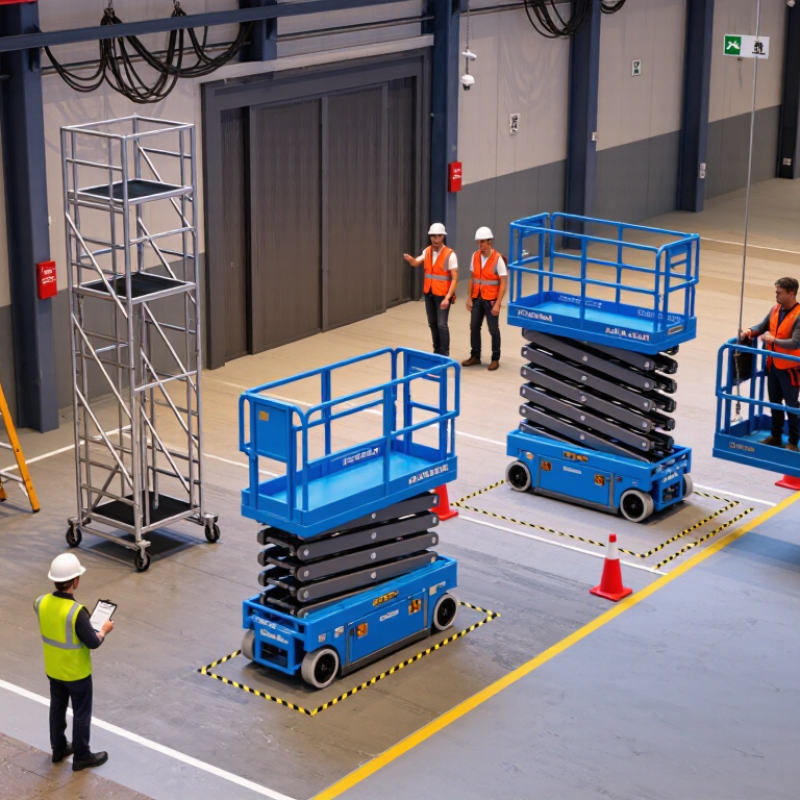
How to Choose Access Equipment That Meets Safety Standards?

Define the Worksite’s Access Needs and Hazard Conditions

Choosing access equipment starts with the worksite, not the catalogue. Walk the route before selecting a ladder, scaffold, or mobile elevating work platform. Measure working height, platform height, reach distance, doorway width, ground strength, and travel space. Note overhead cables, fragile surfaces, vehicle movement, falling objects, wind, rain, and nearby openings. A six-metre ceiling above an uneven concrete slab needs different controls from indoor work on a dry, level floor.

The hazard review should match the equipment’s limits and intended use. OSHA reported 395 fatal construction falls in 2022, representing a major share of industry deaths. The U.S. Bureau of Labor Statistics recorded 1,075 fatal construction work injuries in 2023. These figures show why access planning cannot rely on height alone. Check load capacity, guardrails, stabilisers, emergency lowering, inspection records, and operator competence. Keep tools within easy reach. Overreaching is a small action with serious consequences.

A practical trial often reveals problems that drawings miss. Can workers enter safely while carrying materials? Does the platform remain stable near a drain or temporary ramp? Can rescue equipment reach the position? I would not treat a completed checklist as proof of safety. Conditions change during a shift. Recheck the surface, weather, traffic, and task before use. Refer to OSHA requirements, applicable ANSI/ASSP standards, and the equipment manufacturer’s instructions. Then record the reasoning, including uncertainties and rejected options.

Access Equipment Selection: Baseline Safety Checks

Before selecting access equipment, identify the required working height, task duration, ground conditions, fall exposure, nearby electrical hazards, and operator competency. The chart shows the number of baseline checks to verify for each equipment type, based on common requirements in OSHA 29 CFR 1910.23, 29 CFR 1926.451, and 29 CFR 1926.453. Always apply the requirements of the relevant local regulations and the site-specific risk assessment.

Check Equipment Compliance With Applicable Safety Standards

Choosing access equipment safely begins with compliance, not platform height. Identify the work location, equipment type, ground conditions, and maximum load. Then check the standards that apply in that jurisdiction. Common references include EN 280-1, ANSI A92, CSA standards, and AS/NZS 1418.10. Requirements differ between regions. Confirm the equipment has valid inspection records, operating manuals, safety labels, and a traceable conformity declaration.

The U.S. Bureau of Labor Statistics recorded 1,069 construction fatalities in 2022. Falls caused 395 of them, or about 37 percent.

IPAF’s 2024 Global Safety Report recorded 118 powered-access fatalities during 2023.

These figures show why compliance checks must cover more than paperwork. Ask whether the machine suits the surface, reach, wind exposure, and rescue plan. A compliant machine can still be unsafe when used beyond its rated capacity.

Inspect guardrails, gates, emergency lowering systems, alarms, outriggers, and harness attachment points. Test controls before anyone rises. Review operator training against the equipment’s exact model and local requirements.

I have seen teams check certificates while overlooking damaged tires or missing site barriers. That is an uncomfortable gap.

Keep dated inspection records, photographs, and corrective actions. A certificate may be current, yet the machine’s condition can change before the next formal examination.

Compare Equipment Types, Ratings, and Essential Safety Features

Choosing access equipment starts with the task, not the highest available platform. Ladders suit short, light work on stable ground. Mobile scaffold towers provide a larger working area but need level assembly and secure access. Scissor lifts offer vertical reach and steady platforms. Boom lifts reach over obstacles, although their movement demands greater operator awareness.

Compare ratings carefully. Check platform height, maximum load, worker capacity, and tool weight together. A machine rated for two people may not support heavy materials. Review wind limits, ground requirements, and outdoor suitability before delivery. Higher reach is not automatically safer. Sometimes, it creates more movement and risk.

Safety features should be visible and practical. Look for guardrails, toe boards, non-slip steps, locking wheels, outriggers, and platform interlocks. Emergency lowering systems matter when power fails. Harness attachment points may be necessary on certain equipment, but they do not replace guardrails or training. Inspect the unit before every shift, including tires, controls, labels, and hydraulic leaks. Keep records of inspections and operator training.

Small details matter. A blocked access gate can change a safe setup quickly. I have seen teams focus on height while ignoring uneven flooring. That mistake is easy to repeat. Confirm the equipment’s certification, inspection status, and manufacturer instructions through reliable documentation. If the rating label is damaged or unclear, stop and verify it before use.

Verify Supplier Quality, Inspection Records, and User Training

How to Choose Access Equipment That Meets Safety Standards?

A reliable choice starts with the supplier, not the equipment’s appearance. Ask for documented quality controls, competent inspection procedures, and clear maintenance responsibilities. The supplier should explain how each unit is tested before delivery and after repairs. Request inspection records with the equipment’s identification number, inspection date, findings, and corrective actions. Missing details matter. A polished certificate can still hide weak daily control.

Compare records against the actual machine. Check labels, guardrails, emergency controls, wheels, and visible damage. Confirm that rated capacity and operating limits are easy to read. Inspection dates should remain current under your local requirements. If a supplier avoids questions or provides unclear documents, pause the purchase. In practice, teams sometimes trust paperwork too quickly. That is worth reconsidering.

Tips: Ask to see one complete sample record before ordering. Verify who performed each inspection and what qualifications they hold. Keep delivery checks, repairs, and periodic inspections in one traceable file. User training should include setup, pre-use checks, safe positioning, load limits, emergency lowering, and reporting defects. Use a short practical demonstration, not only a signed attendance sheet. Then observe the operator using the equipment. Small mistakes often appear there. Retraining may be necessary, even when the form looks complete.

Establish Safe Operation, Maintenance, and Review Procedures

How to Choose Access Equipment That Meets Safety Standards?

Safe access equipment needs clear operating procedures, not only a compliance label. Before each shift, a trained operator should inspect guardrails, platforms, wheels, gates, controls, and emergency stops. The ground must be firm, level, and free from oil, loose materials, and overhead hazards. Operators should understand the rated load and never improvise with boxes, ladders, or unstable extensions. Keep the instructions nearby. Small details matter.

Maintenance should follow the manufacturer’s guidance and the equipment’s actual working conditions. Record inspections, faults, repairs, and replacement parts in a dated log. Remove damaged equipment from service immediately, then mark it clearly. A competent person should review recurring faults and confirm that repairs work under controlled conditions. A checklist helps, but it is not perfect. It may miss unusual noise, slow movement, or a loose connection noticed by an experienced operator. That feedback deserves action, not polite filing.

Tips: Use a short pre-use checklist with photographs for critical components. Keep access routes clear and lighting adequate. Refresh training after incidents, equipment changes, or long periods without use. Review procedures monthly at first, then adjust the schedule based on inspection results. Ask operators what feels awkward or unsafe; practical concerns often appear before formal failures. One weak habit can undermine a strong procedure.

How to Choose Access Equipment That Meets Safety Standards? — Establish Safe Operation, Maintenance, and Review Procedures

Equipment Category Typical Application Key Selection Data Relevant Safety Requirements Safe Operation Procedure Maintenance and Inspection Review Frequency and Records
Mobile Elevating Work Platform — Scissor Type Indoor or outdoor work requiring a stable vertical working platform, such as installation, inspection, and maintenance. Confirm platform height, rated capacity, platform dimensions, aisle width, floor loading, gradient limits, and whether the surface is suitable for outdoor travel. Use equipment designed and marked in accordance with applicable MEWP requirements, such as ISO 18893 or EN 280-1. Guardrails, toe boards, emergency lowering, alarms, and interlocks should be fitted and functional. Complete a pre-use inspection; deploy stabilizers where provided; keep the platform within its rated load; maintain required clearance from electrical hazards; never use ladders or boxes to gain extra height. Inspect controls, tires, brakes, guardrails, gates, hydraulic systems, emergency lowering, alarms, batteries, and structural welds. Remove from service when a safety-critical defect is found. Operator inspection before each shift or use; formal inspection and preventive maintenance according to the manufacturer’s instructions and local law; retain defect, repair, and inspection records.
Mobile Elevating Work Platform — Boom Type Work requiring horizontal outreach, elevated access over obstacles, or positioning at different heights. Assess maximum working height, maximum outreach, ground bearing pressure, rated platform capacity, wind rating, turning radius, and possible entrapment points. Apply relevant MEWP standards, including ISO 18893 or EN 280-1, together with applicable fall-protection rules. A designated anchor point and suitable personal fall-protection equipment may be required by the risk assessment. Use only trained and authorized operators; maintain the required minimum approach distance from energized lines; use a ground-level emergency operator; follow wind and weather limits; do not climb on guardrails. Check boom sections, pins, slew ring, hoses, cylinders, controls, platform leveling, emergency stop, overload system, harness anchor, tires, brakes, and outriggers where fitted. Pre-use inspection before each shift; periodic inspection by a competent person at the interval required by law or the equipment instructions; document operator authorization and corrective actions.
Supported or Suspended Scaffold Extended-duration access for construction, façade work, painting, and maintenance activities. Verify platform width, working height, maximum intended load, tie and brace arrangement, base conditions, access method, and compatibility of components. Under OSHA requirements, scaffold components must support their own weight plus at least four times the maximum intended load. Guardrails and falling-object protection are required where applicable; use competent-person oversight. Erect, alter, and dismantle under competent-person supervision; fully plank platforms; keep access clear; do not exceed load limits; do not move a scaffold while occupied unless specifically designed and controlled for that purpose. Inspect frames, tubes, couplers, planks, guardrails, ties, braces, wheels, base plates, suspension systems, and access points. Replace damaged or incompatible components. Inspect before each work shift, after events that could affect structural integrity, and after alteration or relocation. Keep erection plans, inspection records, and load information available.
Mobile Scaffold Tower Short-term work on relatively level surfaces where repeated relocation is necessary. Check tower height-to-base ratio, wheel and caster capacity, platform load, stabilizer requirements, floor condition, and access configuration. Follow the applicable scaffold standard and manufacturer design. Under OSHA rules, a mobile scaffold generally requires restraint when the height exceeds two times the minimum base dimension, unless otherwise designed and secured. Lock casters before climbing; use internal access; keep platforms fully decked and guarded; never move the tower with people or unsecured materials on it; maintain level and stable ground conditions. Check caster locks, frames, braces, platforms, guardrails, toe boards, stabilizers, access ladders, and signs of corrosion or deformation before use. Inspect before each shift and after relocation, modification, impact, or severe weather. Record the inspection status and isolate any tower that fails inspection.
Portable Ladder Brief, light-duty tasks where the work can be completed without prolonged elevated exposure or heavy handling. Select the correct type, length, duty rating, material, step configuration, and electrical suitability. The highest standing level should allow safe work without overreaching. Use a ladder meeting applicable regulations and standards. For a leaning ladder, OSHA guidance commonly uses a 4:1 setup ratio and requires the ladder to extend at least 3 feet above an upper landing when used for access. Face the ladder while climbing; maintain three-point contact; keep the belt buckle between the side rails; secure the ladder against movement; never use the top step of a stepladder unless designed for that purpose. Inspect rails, rungs, feet, spreaders, hinges, labels, locks, and contamination. Clean, tag, and remove ladders with cracks, bends, missing parts, or damaged slip-resistant feet. Inspect before each use and after an incident or exposure to damaging conditions. Maintain a ladder register for high-use or shared equipment.
Personal Fall-Protection System Work where collective protection cannot fully eliminate fall exposure, including certain boom-platform or roof-access activities. Assess total fall clearance, anchorage location, connector length, swing-fall risk, user weight, rescue method, compatibility, and expected environmental exposure. Use equipment meeting applicable fall-protection requirements. Under OSHA personal fall-arrest provisions, an anchorage is generally required to support at least 5,000 pounds per attached worker or be part of a properly designed system with a safety factor of two. Inspect and correctly fit the harness before use; connect only to an approved anchorage; maintain required clearance; prevent contact with sharp edges; implement a prompt rescue plan for a suspended worker. Check webbing, stitching, buckles, D-rings, energy absorbers, connectors, labels, and signs of chemical, heat, abrasion, or fall damage. Do not repair or modify components unless permitted by the manufacturer. User inspection before each use; formal inspection by a competent person at the organization’s defined interval and after any fall arrest; quarantine equipment involved in a fall.
General Selection and Governance Controls Applies to every access-equipment purchase, rental, issue, and site deployment. Match the equipment to task duration, reach, load, surface, environment, traffic, weather, electrical hazards, rescue needs, operator competence, and available storage or charging facilities. Verify statutory compliance, conformity documentation, operating instructions, inspection status, rated-load markings, guarding, emergency systems, and suitability for the work environment before approval. Use a documented risk assessment and method statement; provide task-specific training; establish exclusion zones; control unauthorized access; stop work when conditions change or controls fail. Use a planned maintenance system based on risk and manufacturer instructions. Label equipment with inspection status, isolate defective equipment, and verify repairs before returning it to service. Review procedures after incidents, near misses, equipment changes, new regulations, recurring defects, or changes in the work environment. Retain training, inspection, maintenance, repair, and review records.
Compliance note: Safety requirements vary by jurisdiction, equipment type, site conditions, and task risk. Confirm the current requirements of the applicable authority, standards, equipment instructions, and site safety plan before use.

FAQS

How should I choose between a ladder, scaffold tower, scissor lift, and boom lift?

Match the equipment to the task, height, surface, and required working space. Ladders suit short, light work on stable ground. Scaffold towers provide wider platforms but need level assembly and secure access. Scissor lifts move vertically with steady platforms. Boom lifts reach over obstacles but require careful movement. Higher is not always safer.

Which equipment ratings should I check before use?

Check platform height, maximum load, worker capacity, and tool weight together. Two workers may exceed the limit when carrying materials. Review wind limits and ground requirements for outdoor work. A clear rating label matters. If it is damaged, stop and verify it.

What ground conditions are suitable for access equipment?

The ground should be firm, level, clean, and free from oil. Remove loose materials and check for overhead hazards. Uneven flooring can make a tall platform unstable. That detail is easy to overlook. Do not compensate with boxes or improvised supports.

Which safety features deserve close attention?

Look for guardrails, toe boards, non-slip steps, and locking wheels. Outriggers and platform interlocks should work correctly. Emergency lowering systems help when power fails. Check gates and controls before every shift. A blocked gate is not a small issue.

Are harness attachment points enough to prevent falls?

No. Harness points may be necessary on some equipment, but they do not replace guardrails. They also do not replace training or proper operating procedures. Use the required protection for the specific equipment and task. More equipment does not automatically mean more safety.

What should operators inspect before each shift?

Inspect guardrails, platforms, wheels, gates, controls, and emergency stops. Check tires, labels, hydraulic lines, and visible leaks. Notice unusual noise, slow movement, or loose connections. Those signs matter. A checklist may miss something obvious to an experienced operator.

How should inspections, repairs, and training be documented?

Keep a dated log of inspections, faults, repairs, and replacement parts. Record operator training and equipment changes as well. Remove damaged equipment from service immediately and mark it clearly. A competent person should confirm repairs under controlled conditions. Filing a problem is not fixing it.

When should operating procedures and training be reviewed?

Review procedures monthly during the early stage of use. Adjust the schedule according to inspection results and recurring faults. Refresh training after incidents, equipment changes, or long periods without use. Ask operators what feels awkward or unsafe. Their feedback may reveal weak habits before failure.

Conclusion

Choosing access equipment safely begins with understanding the worksite. Assess the required height, reach, load capacity, surface conditions, available space, task duration, and hazards such as falls, unstable ground, overhead obstacles, electrical exposure, or moving vehicles. This evaluation helps determine the most suitable equipment type and prevents selecting a solution that is inadequate or unnecessarily complex. It is also important to ask, “what safety standards apply to access equipment,” and confirm that the equipment meets all applicable requirements for its intended use, location, and operating conditions.

Before purchase or rental, compare equipment ratings, stability features, guardrails, locking systems, emergency controls, and other protective functions. Review the supplier’s quality procedures, inspection records, maintenance history, and user training arrangements. After installation or delivery, establish clear operating rules, pre-use inspections, scheduled maintenance, defect reporting, and periodic risk reviews. Operators should receive practical instruction and use the equipment only within its rated limits. A consistent process covering selection, verification, training, operation, and review supports safer and more reliable access work.

Ethan

Ethan

Ethan is a seasoned marketing professional with a deep expertise in our company's innovative product line. With a passion for sharing knowledge and insights, he takes the lead in regularly updating our corporate blog, where he explores industry trends, product features, and effective marketing......