How to Choose the Best Lifting Equipment for Construction?

Time:2026-10-16 Author:Madeline
0%

Choosing lifting equipment for construction is a safety decision, not merely a purchasing decision. Cranes, telehandlers, hoists, and mobile elevating work platforms each suit different site conditions. Load weight matters. So does context. A 10-ton lift near a congested road requires a different plan from a 10-ton lift inside a clear factory shell.

Official data reinforces this responsibility. The UK Health and Safety Executive recorded 51 worker fatalities in construction during 2023/24. OSHA also identifies struck-by hazards as one of construction’s leading fatal risks. These figures make equipment selection inseparable from lift planning, operator competence, exclusion zones, and maintenance. Deloitte’s 2025 Engineering and Construction Industry Outlook also highlights continuing labor, productivity, and supply-chain pressures. Those pressures can encourage rushed decisions, especially when projects face tight schedules.

So, which lifting solutions are best for construction projects? The answer depends on the lift radius, ground-bearing capacity, headroom, duty cycle, weather exposure, and access routes. A qualified planner should verify the manufacturer’s load chart, not rely on rated capacity alone. A crawler crane may provide stable reach on difficult terrain, while a telehandler can move materials quickly across changing work areas. Hoists often offer precise vertical handling in confined structures. MEWPs can improve access, but only after checking ground conditions and fall-protection requirements.

A tidy spreadsheet cannot replace a site walk. This is where many equipment comparisons become too theoretical. The best choice balances safety, reach, productivity, transport, training, inspection, and total ownership cost. It should also include a realistic contingency for wind, uneven ground, delayed deliveries, or an unexpected change in the lifting sequence.
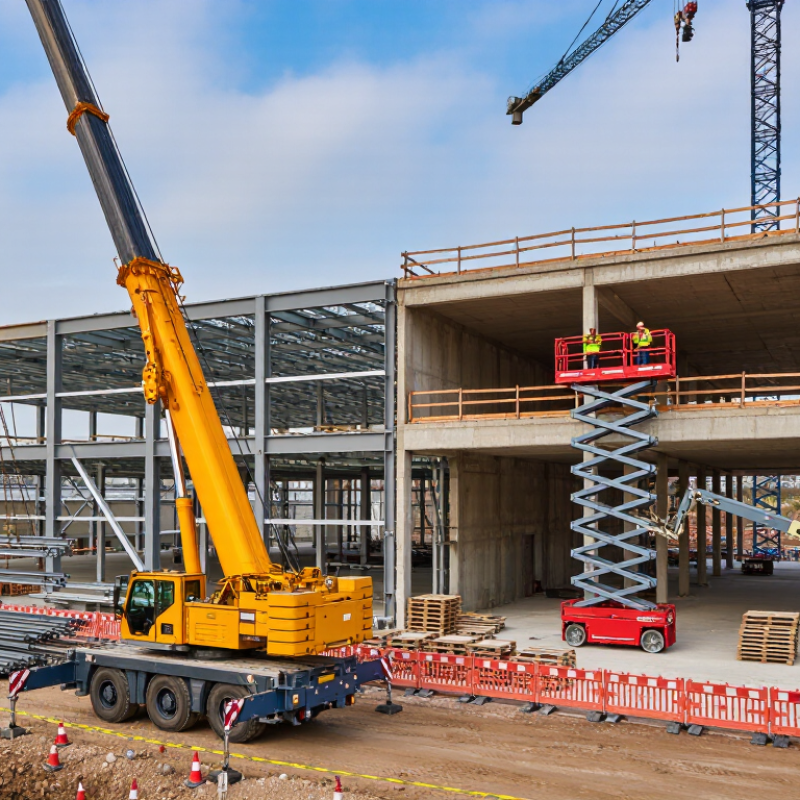
How to Choose the Best Lifting Equipment for Construction?

Define the Construction Lifting Task and Site Requirements

Choosing lifting equipment starts with defining the actual construction task, not guessing from the load weight. Record the load’s weight, dimensions, lifting points, center of gravity, and required height. A 12-ton load may need different equipment at a five-meter radius than at a twenty-meter radius. Note the lifting frequency, travel distance, and placement accuracy. These details affect capacity, reach, speed, and control.

Inspect the site before selecting equipment. Measure ground bearing strength, working space, access routes, overhead obstructions, and nearby structures. Soft soil may require engineered mats or ground improvement. Narrow entrances can prevent delivery of otherwise suitable machinery. Check wind exposure, visibility, lighting, and weather limits. Keep people outside the lifting zone. Confirm that the planned setup allows safe communication between the operator and signal person.

Use current load charts, inspection records, and the equipment manual during planning. A competent lifting supervisor should verify the configuration, accessories, and rated capacity. Slings, shackles, spreader beams, and hooks must match the load and connection points. Site conditions can change after rain or excavation. Recheck the plan before each shift. A neat drawing can still miss a buried service or an unstable edge. That mistake is worth challenging early. Reliable lifting decisions come from measured conditions, documented checks, and honest discussion with the work crew.

Compare Lifting Equipment Types and Their Main Applications

Choosing lifting equipment starts with the load, the site, and the movement required. A tower crane suits tall buildings and repeated lifting across a wide area. Its fixed position supports concrete forms, steel beams, and pallets on upper floors. A mobile crane works better where access changes daily. It can arrive, set up, and lift heavy sections near roads or open ground.

For shorter movements, a telehandler offers useful flexibility. Its telescopic boom places bricks, roof materials, and equipment at different heights. However, its capacity drops as the boom extends. A forklift is more precise inside warehouses or on firm slabs. It is not a safe choice for rough, unstable ground. Chain hoists and electric hoists handle controlled vertical lifting in workshops, shafts, and maintenance areas. They need suitable anchorage.

Site conditions often decide more than rated capacity. Check ground bearing strength, overhead cables, wind exposure, travel paths, and the load’s center of gravity. A 10-ton load is not automatically safe for a 10-ton machine. Rigging angle changes tension.

Small details matter.

Operators should verify inspection records, load charts, attachment condition, and emergency controls before work begins. Local safety rules and manufacturer instructions must guide the lift plan. Experienced supervisors also watch changing weather and communication gaps. A neat equipment chart can still mislead when the ground becomes soft or the delivery route narrows. Sometimes, choosing the larger machine feels safer, but it may create blind spots, setup problems, and unnecessary cost.

Evaluate Capacity, Reach, Mobility, and Operating Conditions

How to Choose the Best Lifting Equipment for Construction?

Evaluate Capacity, Reach, Mobility, and Operating Conditions

Capacity is the first practical check, but the listed maximum load can mislead.

Review the load chart at the planned boom length, working radius, and height. Include the weight of slings, hooks, spreader beams, and other attachments. A 10-ton load may exceed safe capacity at a long reach. Check the load’s center of gravity, too. It can shift during lifting.

Reach must match the site, not only the drawing.

Measure the distance from the equipment position to the landing point. Look for overhead structures, trenches, walls, and restricted access. Extra reach often reduces lifting capacity. This is easy to overlook during planning. I would verify the worst position with a qualified lifting engineer, especially when the load swings near people or structures.

Mobility depends on ground conditions and the work sequence.

Track or wheel movement may require firm, level surfaces and suitable access routes. Check axle loads, turning space, doorway width, and setup time. Operating conditions matter just as much. Wind, rain, dust, poor lighting, and extreme temperatures can affect stability and visibility. Indoor projects may need low-emission equipment and careful ventilation. Outdoor projects may require stronger ground protection. A site walk can reveal problems that a spreadsheet misses. Even experienced teams sometimes underestimate mud after overnight rain. Recheck the plan before every critical lift.

Check Safety Features, Compliance Standards, and Operator Training

Choosing lifting equipment starts with the load, not the catalogue. Record weight, dimensions, lifting points, height, reach, and ground conditions. A compact crane may fit a crowded site, yet limited capacity at full reach can create danger. Check the load chart under the actual configuration. Include wind, uneven surfaces, and nearby power lines in the assessment. Do not guess.

Safety features deserve a hands-on inspection. Look for overload protection, emergency stops, limit switches, guarded controls, audible alarms, and stable outriggers. Confirm that slings, hooks, shackles, and attachment points have visible identification and current inspection records. The equipment should match local regulations and recognized safety standards. Keep certificates, maintenance logs, risk assessments, and pre-use checklists on site. Paperwork is not proof. A physical inspection still matters.

Operator training must cover more than moving levers. Workers need equipment-specific instruction, daily checks, load-chart reading, hand signals, exclusion zones, and emergency response. A competent supervisor should verify practical skill, not merely collect a certificate. Refresh training after incidents, long absences, or equipment changes. A quiet test lift can reveal poor communication, unstable ground, or an awkward load angle. Teams often rush this step. That saves minutes, but weakens control when conditions change.

Calculate Total Costs, Maintenance Needs, and Equipment Availability

Choosing lifting equipment for construction requires more than comparing purchase prices. Calculate the total cost across the project period. Include delivery, setup, operator training, fuel, insurance, inspections, and removal. A cheaper crane can become expensive when transport takes three days. Rental rates may look simple, but overtime and standby charges can change the result quickly.

Maintenance needs also affect the real budget. Review service intervals, spare-part access, inspection records, and technician availability before signing an agreement. Ask how quickly faults are normally repaired. One failed hydraulic hose can stop several workers and delay concrete placement. I have seen teams underestimate downtime because their spreadsheet assumed perfect conditions. That assumption rarely survives a wet week.

Tips: Build three cost scenarios: normal use, heavy use, and unexpected delay. Confirm the equipment’s rated capacity at the required reach, not only its maximum capacity. Check local site access, ground strength, power supply, and delivery windows. Reserve backup equipment when a single lifting machine controls the schedule. Keep daily inspection notes with photographs. Small records can expose repeated problems early. Availability is not guaranteed, even when a supplier confirms it verbally. Get dates, maintenance responsibilities, and replacement terms in writing.

FAQS

What information should be recorded before selecting lifting equipment?

Record the load’s weight, dimensions, lifting points, center of gravity, height, radius, and placement accuracy. Frequency matters too. A 12-ton load at five meters differs from one at twenty meters.

Why does the lifting radius affect equipment choice?

Equipment capacity changes with reach. A machine rated for maximum capacity may not safely lift that load at the required radius. Check the current load chart.

What site conditions must be inspected before delivery?

Check ground strength, access routes, working space, overhead obstructions, nearby structures, weather, lighting, and visibility. Soft soil may need engineered mats. Narrow entrances may block delivery.

How should the lifting zone be controlled?

Keep people outside the lifting zone. Confirm clear communication between the operator and signal person. Wind, poor lighting, or blocked visibility may require a different setup.

Which accessories must be checked with the lifting equipment?

Match slings, shackles, hooks, and spreader beams to the load and connection points. Check their condition, rating, and inspection records. Small details matter.

Why should the lifting plan be reviewed before every shift?

Rain, excavation, buried services, or unstable edges can change site conditions. A neat drawing is not proof. Challenge unsafe assumptions early.

What costs should be included when comparing lifting equipment?

Include delivery, setup, training, fuel, insurance, inspections, operation, overtime, standby charges, and removal. A cheaper machine can create higher costs after delayed transport.

How can maintenance affect the project budget?

Review service intervals, spare-part access, inspection records, and technician response times. One failed hydraulic hose can stop several workers. Downtime is often underestimated.

How should equipment availability be confirmed?

Get delivery dates, maintenance duties, and replacement terms in writing. Verbal confirmation is not enough. Keep a backup option when one machine controls the schedule.

What cost-planning method is practical for uncertain site conditions?

Prepare normal-use, heavy-use, and delay scenarios. Add realistic time for weather and repairs. Perfect conditions are a weak assumption.

Conclusion

Choosing the best lifting equipment for construction begins with clearly defining the lifting task and evaluating site conditions, including load weight, lifting height, working radius, ground stability, access limitations, and weather exposure. Different equipment types serve different purposes, so selection should consider whether the project requires vertical lifting, material transport, precise positioning, or frequent movement between work areas. Comparing capacity, reach, mobility, power source, and operating conditions helps determine which lifting solutions are best for construction projects.

Safety and efficiency are equally important. Equipment should include appropriate safety features, comply with relevant regulations and inspection requirements, and be operated only by properly trained personnel. Project managers should also calculate total costs, including purchase or rental expenses, fuel or energy use, maintenance, transportation, and possible downtime. Checking equipment availability and planning regular inspections can prevent delays and improve productivity. A balanced decision based on performance, safety, reliability, and long-term value will support a smoother and more successful construction project.

Madeline

Madeline

Madeline is a dedicated marketing professional with a wealth of expertise in our company's core offerings. With a keen understanding of the industry, she brings a unique perspective to her role, consistently delivering high-quality content that highlights the superior aspects of our products. As......