How to Boost Efficiency in Construction Site Operations?

Time:2026-05-05 Author:Mason
0%

Construction site operations face many challenges. Poor communication and delays can lead to inefficiency. To overcome these issues, construction managers often seek effective strategies. This article explores how to increase efficiency in construction site operations.

Improving workflow is crucial. It requires understanding the project needs and daily tasks. Teams must collaborate effectively to minimize downtime. Each worker’s role should be clearly defined. However, even with the best plans, unexpected challenges arise. Adjusting to these changes is often necessary. Flexibility can help teams stay on track.

Incorporating technology can enhance productivity. Tools such as project management software simplify tasks and improve communication. However, not every team embraces change easily. Resistance to technology can slow progress. Building a culture of continuous improvement is vital for long-term success. Construction leaders must champion new methods to boost team engagement and drive efficiency.
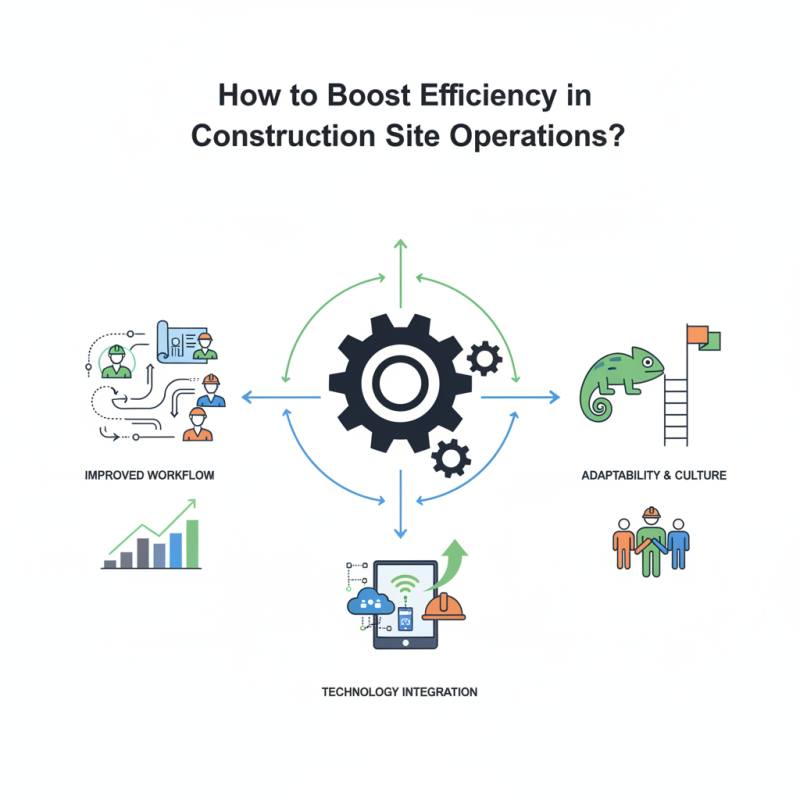
How to Boost Efficiency in Construction Site Operations?

Identifying Key Areas for Improvement in Construction Operations

Improving efficiency in construction operations requires careful analysis of key areas. A recent report from the McKinsey Global Institute indicated that construction productivity has lagged behind other industries by 20% since 1990. Identifying bottlenecks in these operations is essential. For example, project scheduling and communication often suffer from delays. Streamlined workflows can significantly enhance project timelines.

Adopting digital tools can be a game-changer. According to a study by the Construction Industry Institute, projects that utilize advanced planning and modeling reduce costs by an average of 6-15%. However, many firms still rely on outdated practices. Regular training for workers is also crucial. An American Society of Civil Engineers report highlighted that skilled labor shortages hinder performance, suggesting a need for ongoing education.

Monitoring jobsite conditions provides valuable insights. Regular assessments can reveal inefficiencies, such as unnecessary equipment idle times. As of 2021, approximately 30% of labor hours on construction sites were classified as non-productive. The construction industry must confront these issues to enhance overall efficiency. Fostering a culture of continuous improvement is key.

How to Boost Efficiency in Construction Site Operations

This chart illustrates the efficiency scores associated with various critical areas of construction site operations, indicating where improvements can significantly enhance overall performance.

Implementing Technology Solutions to Streamline Processes

Implementing technology solutions in construction sites can significantly enhance operational efficiency. Many companies now utilize project management software to track progress and allocate resources effectively. This allows teams to identify bottlenecks early and adjust workflows as necessary. Real-time data collection and analysis streamline communications among stakeholders. However, not all technology solutions work seamlessly with existing processes.

Mobile applications facilitate on-site reporting. Workers can quickly share updates and address issues as they arise. Drones provide aerial views for site assessments, which helps in planning and monitoring. Yet, adopting new technology can pose challenges. Training staff to use these tools effectively is essential, and resistance to change can delay progress.

Investing in sensor technology for machinery monitoring can optimize equipment usage. This data can prevent breakdowns and schedule maintenance. However, construction teams must be cautious about over-relying on technology. Misinterpretation of data can lead to poor decisions. Selecting the right technology is crucial, but teams also need to maintain traditional skills and human oversight to ensure project success.

Enhancing Communication and Collaboration Among Teams

Effective communication and collaboration are vital in construction site operations. A recent report by the McKinsey Global Institute highlighted that poor communication can delay projects by 20%. This delay results in increased costs and decreased efficiency. Enhancing collaboration among teams can mitigate these issues.


To improve communication, using construction management software can streamline workflows. These tools facilitate real-time updates and centralize information. Teams can access project details instantly, reducing misunderstandings. Regular team meetings are essential, too. They ensure everyone is on the same page and encourages feedback.


Tips: Establish a shared digital space for documents. This helps teams reference materials easily. Encourage open dialogue among workers. Sometimes, informal conversations lead to innovative solutions. Monitor progress using visual tools like dashboards. They can highlight bottlenecks and keep everyone informed.


Despite technology's advantages, not all teams adopt it successfully. Resistance to change often hampers efficiency. It’s crucial to train staff adequately on the tools. Analyze team dynamics regularly to identify areas for improvement. Collaboration should evolve as project needs change. Collecting feedback will help refine processes further.

Developing Effective Training Programs for Workforce Efficiency

Effective training programs are crucial to enhancing workforce efficiency on construction sites. Workers need practical skills that match their roles. Training should involve hands-on experiences. For instance, virtual simulations can replicate real-life scenarios. This method allows workers to practice without risk. Such immersive training boosts confidence and skill retention.

Moreover, continuous learning is essential. Workshops and seminars can keep staff updated on safety protocols and new technologies. Engaging employees in the learning process fosters a culture of improvement. Encouragement to provide feedback is vital. Not all training programs will resonate with every worker. Gathering insights on what works and what doesn’t helps tailor future initiatives.

It’s also important to measure training outcomes. Tracking productivity and safety records post-training can highlight areas for growth. Some programs may need adjustment based on these evaluations. While it's easy to implement a one-size-fits-all approach, individual learning styles differ. Acknowledging this can lead to a more efficient and satisfied workforce. In the ever-evolving construction industry, adaptable training is key.

Monitoring and Analyzing Performance Metrics for Continuous Improvement

Monitoring and analyzing performance metrics is essential for boosting efficiency in construction site operations. A study by McKinsey found that implementing data analytics can improve productivity by up to 15%. Construction projects often face delays and budget overruns due to inefficient practices. By focusing on key performance indicators (KPIs) such as project completion times, labor productivity, and material usage, teams can identify bottlenecks and areas for improvement.

Tracking performance in real-time helps in making informed decisions. For instance, using mobile apps to collect data can streamline workflows. Reports suggest that real-time data can reduce downtime by 20%. Construction managers should regularly review these metrics to assess team performance. This continuous feedback loop fosters an environment of accountability. Teams may struggle with adapting to new technologies or get overwhelmed by data. Finding the right balance is crucial.

Incorporating performance metrics into daily operations can lead to significant enhancements. A survey by the Construction Industry Institute indicated that organizations that focus on metrics report a 10% increase in efficiency. However, the challenge remains in effectively communicating this data to all team members. Ensuring that everyone understands the metrics is vital for driving engagement and improving overall performance.

FAQS

: Why are effective training programs important for construction workforce efficiency?

: They enhance practical skills that match workers' roles and improve on-site performance.

How can hands-on experiences benefit training?

They allow workers to practice in safe simulations, increasing confidence and skill retention.

What role does continuous learning play in workforce efficiency?

It keeps staff updated on safety and technology, fostering a culture of improvement.

How can feedback improve training programs?

Gathering insights reveals what works or doesn’t, helping to tailor future initiatives.

Why is measuring training outcomes necessary?

It highlights progress in productivity and safety, showing areas needing improvement.

What challenges do teams face with performance metrics?

Adapting to new technologies can be overwhelming, necessitating a balanced approach.

How can real-time data improve construction efficiency?

It streamlines workflows and reduces downtime, ultimately enhancing productivity.

Why is communication important in utilizing performance metrics?

Ensuring all team members understand the data drives engagement and boosts performance.

What happens if a one-size-fits-all training approach is used?

It may not meet diverse learning styles, leading to inefficiency and dissatisfaction.

How can performance metrics impact construction project outcomes?

Organizations that focus on metrics often see a significant efficiency increase.

Conclusion

To understand how to increase efficiency in construction site operations, it is essential to identify key areas that require improvement. This involves assessing workflows, resource allocation, and project timelines to pinpoint inefficiencies. Next, implementing technology solutions can significantly streamline processes, with tools that automate tasks and enhance data management.

Furthermore, fostering effective communication and collaboration among teams ensures that everyone is aligned towards common goals, reducing misunderstandings and delays. Developing comprehensive training programs tailored to the workforce is also crucial, as continuous skill enhancement leads to better productivity. Lastly, monitoring and analyzing performance metrics allows for ongoing evaluation, enabling teams to adapt and refine strategies for continuous improvement. These steps collectively contribute to a more efficient construction environment.

Mason

Mason

Mason is a seasoned marketing professional with a deep expertise in the company's offerings and a passion for driving brand awareness. With a strong background in digital marketing strategies, he has an innate ability to connect with diverse audiences and effectively communicate product benefits.......